

GemPack Leads Agriculture-Based Full Cycle Framework
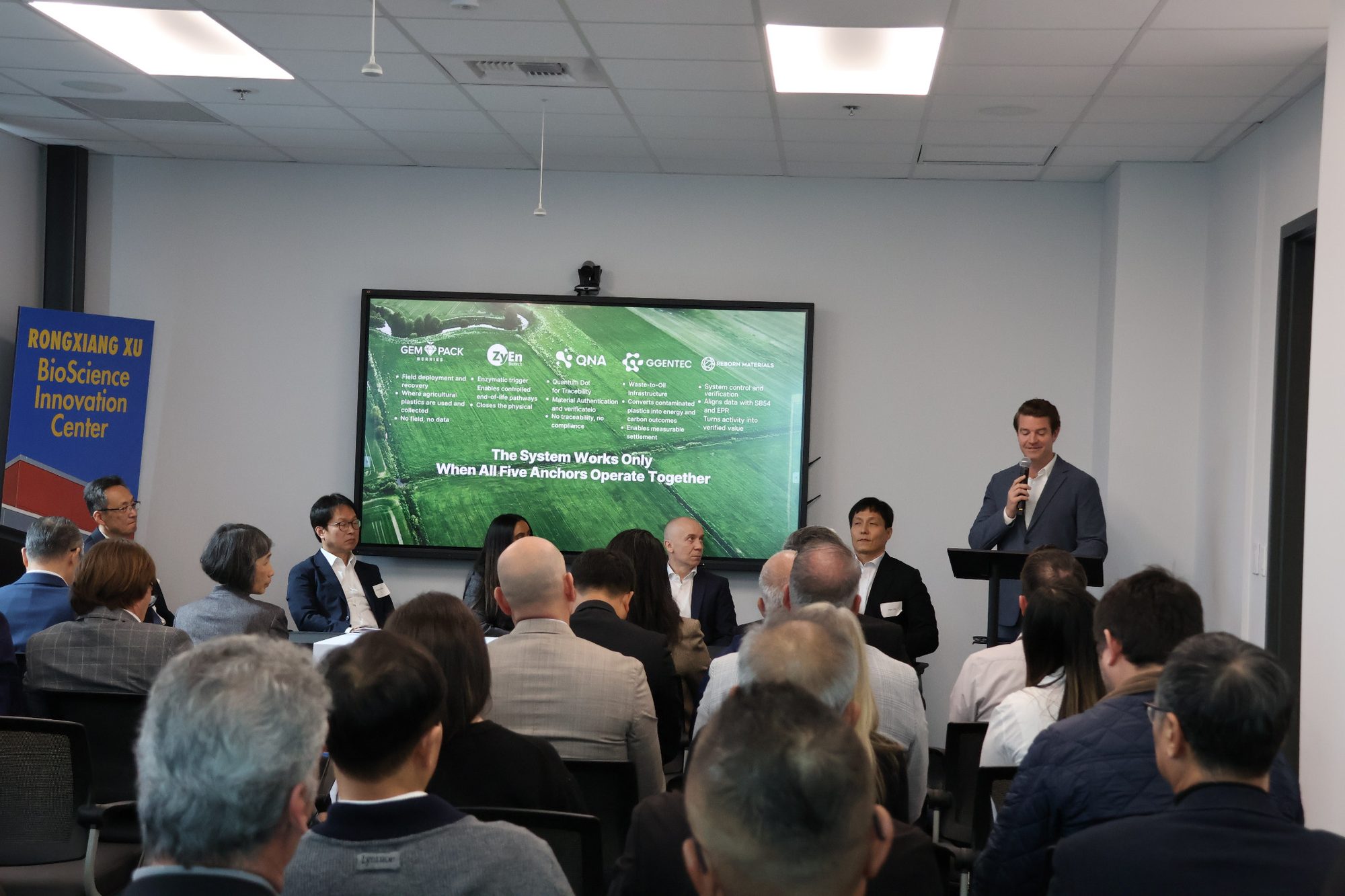


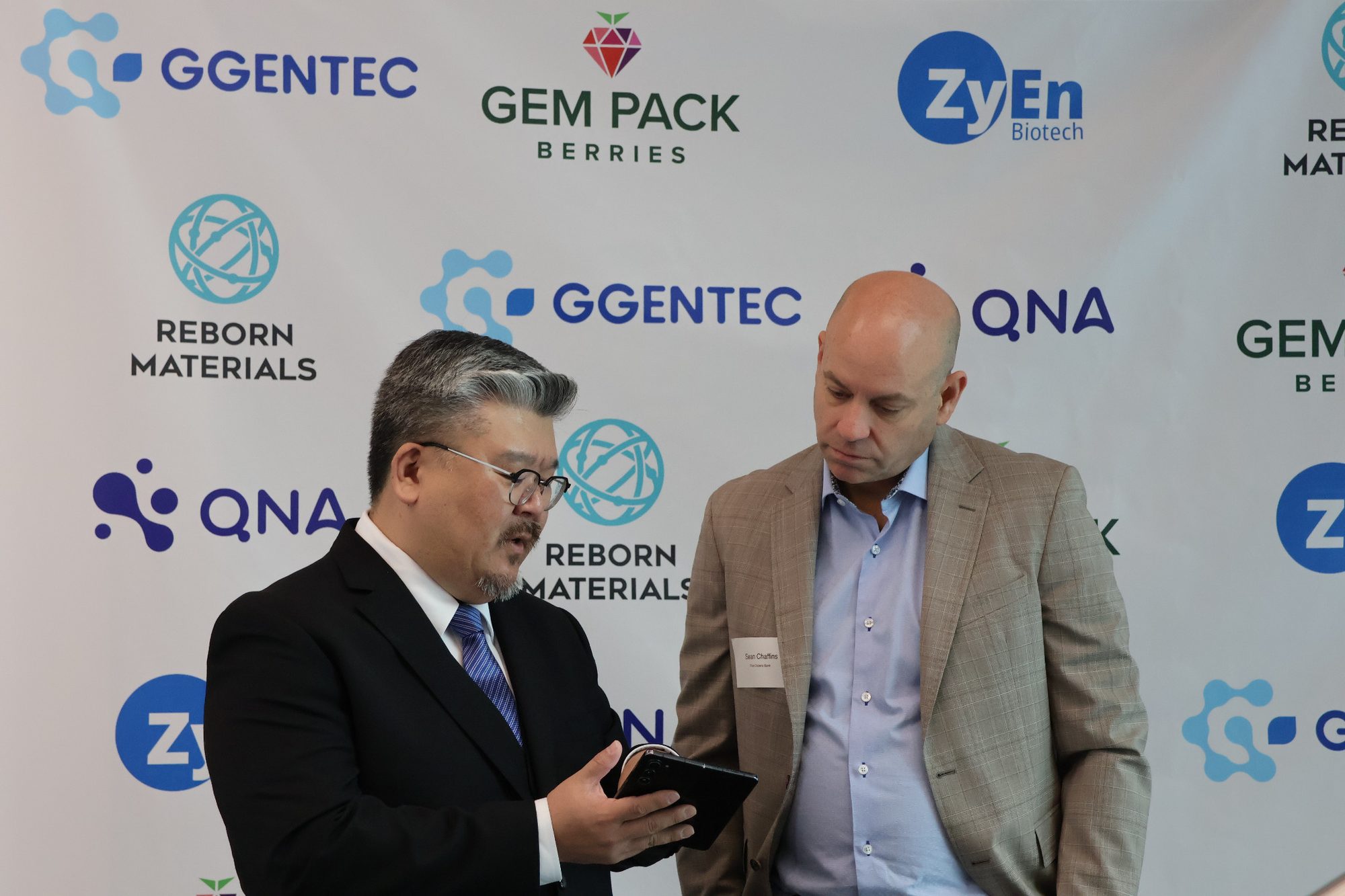
Framework demonstrated at LA BioSpace shows real-world agricultural execution of SB 54 and Extended Producer Responsibility requirements.
QNA Technology S.A. (WSE:QNA)
Policy creates intent. Accountability requires infrastructure. Agriculture is where execution is tested, and where SB 54 and EPR must prove they work in practice.”
LOS ANGELES, CA, UNITED STATES, January 27, 2026 /EINPresswire.com/ -- As California continues to reexamine the implementation of SB 54 and Extended Producer Responsibility (EPR) requirements for plastic packaging, GemPack Berries on January 22, 2026 publicly declared a Full Cycle Framework designed specifically to address agricultural packaging end-of-life. Agricultural packaging has remained one of the most complex and unresolved categories under current policy due to its operational realities, distributed usage, and limited compatibility with traditional recycling and reporting systems.— Davina Hurt, California Climate Policy Director, Pacific Environment
The declaration took place at LA BioSpace at California State University, Los Angeles, and convened representatives from agriculture, academic research, public policy, and international technology development. The purpose of the declaration was not to introduce a conceptual sustainability initiative, but to present an operating framework already functioning in real agricultural environments. The framework is designed to demonstrate how SB 54 and EPR obligations can be executed where packaging is used daily, under time pressure, and at industrial scale.
Unlike consumer packaging systems that rely on centralized waste collection and municipal infrastructure, agricultural packaging is deployed across fields, packing houses, and distribution facilities. These conditions have historically made recovery, verification, and end-of-life accountability difficult to implement and enforce. As a result, agriculture has often been treated as a special case or deferred category under producer responsibility discussions.
The Full Cycle Framework directly addresses this challenge by redesigning responsibility across the entire lifecycle of packaging. Responsibility begins at material design and deployment in the field and continues through recovery, verification, and final end-of-life processing. The framework is structured so that accountability does not depend on assumptions about downstream behavior, but is engineered into the system from the outset.
Agriculture as the Starting Point
GemPack Berries, one of the largest agricultural packaging users in the United States, initiated the Full Cycle Framework based on a fundamental operational requirement. Any sustainability or compliance system intended for agriculture must function within real farming operations without disrupting productivity, food safety, or logistics. Agricultural environments operate on narrow timing windows, strict quality standards, and high throughput. Systems that introduce uncertainty, delay, or operational friction are unlikely to be adopted, regardless of policy intent.
By anchoring the framework in agriculture rather than adapting agriculture to existing models, GemPack repositioned farming operations as the proving ground for EPR execution. This approach treats agriculture not as an exception, but as the environment in which accountability must withstand the most demanding conditions.
GemPack’s role within the framework is not symbolic. Its farms, packing operations, and distribution workflows serve as active nodes where packaging is deployed, tracked, recovered, and validated. These operations provide the real-world context needed to test whether responsibility systems can function beyond controlled pilot settings.
Madu Etchandy, operations leadership at GemPack, emphasized that execution is the determining factor for any system intended for agricultural use.
“In agriculture, packaging is used every day, under pressure, at scale,” Etchandy said. “If something slows operations or introduces uncertainty, it simply does not work. This framework matters because it was built to operate in the field, not just look good on paper.”
By using agriculture as the starting point, the Full Cycle Framework is designed to expose weaknesses that might otherwise remain hidden in less demanding environments. If accountability can be maintained under these conditions, it is more likely to be durable across other sectors.
A Framework Built for SB 54 and EPR Execution
The Full Cycle Framework connects five distinct roles into a single operating system. Each role is responsible for a defined portion of the packaging lifecycle, and the system is designed to prevent gaps where responsibility traditionally breaks down.
GemPack Berries serves as the agricultural proof environment. In this role, packaging is used, handled, recovered, and validated within active farming and packing operations. This ensures that the framework is tested under real operational constraints rather than simulated conditions.
Reborn Materials functions as the system integrator. Its role is to design and coordinate how responsibility moves from packaging use through recovery, verification, and end-of-life processing without interruption. Rather than acting as a single technology provider, Reborn Materials aligns material design, data flows, and infrastructure so that accountability remains continuous across stages that are often disconnected in conventional systems.
ZYEN Biotech, also known as KUBU, is a Korean enzyme technology company led by Professor Kyung Jin Kim of Kyungpook National University. ZYEN provides controlled enzymatic pathways for plastics that cannot be mechanically recycled. These pathways address material streams that would otherwise lack viable end-of-life options under recycling-only approaches.
QNA Technology S.A. is a publicly listed materials science company on the Warsaw Stock Exchange in Poland. QNA supplies quantum-dot based material authentication technology. These quantum dots are embedded within plastic materials and act as invisible markers that enable scientific verification of material identity and handling. This capability is critical for EPR enforcement, where auditability and evidence-based reporting are increasingly required.
GGenTec is a Korean waste-to-value company that provides low-temperature end-of-life infrastructure. Its process converts non-recyclable plastics into usable energy and feedstock rather than landfill. By operating at lower temperatures than conventional incineration or pyrolysis, the system stabilizes operations and reduces environmental risk.
Together, these five roles form an integrated system. Recyclable plastics are routed to recycling pathways. Plastics that cannot be mechanically recycled are directed to enzymatic or waste-to-value processing. All materials are tracked and verified, ensuring that no stream is left without accountability.
Scientific Validation of Enzyme Technology
The enzymatic component of the Full Cycle Framework is grounded in peer-reviewed scientific research. Professor Kyung Jin Kim and his team at Kyungpook National University have developed PET depolymerase enzymes known as KUBU. Their work has been published in the journal Science, validating the enzyme’s ability to depolymerize PET under controlled laboratory conditions.
While academic validation establishes scientific credibility, the Full Cycle Framework extends this work into an operational context. Enzyme performance is integrated with material handling, processing timelines, and downstream infrastructure. This integration is intended to ensure that laboratory results translate into practical end-of-life execution.
Within the framework, enzyme processing is not treated as a standalone solution. It operates as one component within a system that includes verification, recovery logistics, and final disposition. This approach reflects the reality that technological performance alone does not guarantee compliance or accountability.
Professor Kim emphasized the importance of system-level integration.
“The question is not whether an enzyme works in isolation,” Kim said. “The question is whether it works as part of a system where responsibility is carried from use through end-of-life.”
By embedding enzyme technology within a coordinated framework, the system addresses both scientific and regulatory requirements. It ensures that innovation supports accountability rather than creating additional complexity.
Verification and Evidence-Based Accountability
Verification is a central requirement under SB 54 and EPR. Traditional systems often rely on self-reported data, which can be difficult to audit and enforce. The Full Cycle Framework addresses this limitation by incorporating material-level verification.
QNA Technology S.A.’s quantum-dot materials function as invisible digital fingerprints embedded within plastic packaging. These markers can be detected and authenticated without altering the physical properties of the material. As a result, packaging can be scientifically identified and audited at multiple points throughout its lifecycle.
This capability is particularly relevant in agricultural contexts, where packaging may move across fields, facilities, and jurisdictions. Verification ensures that responsibility does not dissipate as materials leave the initial point of use.
Evidence-based verification shifts accountability from claims to proof. It allows regulators and stakeholders to assess compliance based on material data rather than declarations. This approach aligns with the increasing emphasis on enforceability under EPR frameworks.
End-of-Life Infrastructure and System Stability
End-of-life capacity is provided by GGenTec’s low-temperature waste-to-value process. This infrastructure addresses material streams that cannot be mechanically recycled or enzymatically processed. By converting these materials into energy and feedstock, the system prevents accumulation and leakage into landfill or uncontrolled disposal.
Low-temperature processing stabilizes operations by reducing energy demand and emissions relative to high-temperature alternatives. This contributes to system reliability and scalability, both of which are critical for sustained compliance.
By pairing verification with defined end-of-life infrastructure, the Full Cycle Framework ensures that accountability does not end at reporting. Materials are physically processed and resolved, completing the responsibility cycle envisioned under SB 54 and EPR.
Policy Perspective and Public Trust
The declaration included participation from Davina Hurt, California Climate Policy Director at Pacific Environment and a former local government leader. Hurt examined the framework through the lens of governance, enforceability, and public trust.
She noted that environmental policy often encounters challenges not because goals are unclear, but because execution mechanisms are missing or insufficient.
“Policy creates intent. Accountability requires infrastructure. Agriculture is where that distinction becomes unavoidable,” Hurt said.
Her participation underscored that the Full Cycle Framework was evaluated as an execution structure rather than a promotional initiative. The focus was on whether the system could withstand regulatory scrutiny and support enforcement.
Public trust depends on systems that can be verified, audited, and enforced. By integrating infrastructure, verification, and operational reality, the framework seeks to support that trust.
Why This Matters Now
As California revisits SB 54 timelines, compliance pathways, and enforcement realities, agricultural packaging remains a critical unresolved category. Existing models have struggled to accommodate the distributed and operationally constrained nature of agricultural use.
The GemPack-led Full Cycle Framework offers a working reference model grounded in real operations, verified data, and durable end-of-life capacity. Because it is already operating within agricultural environments, it provides insight into how EPR principles can be executed without compromising food safety or operational efficiency.
Rather than attempting to eliminate plastic through mandate alone, the framework focuses on finishing plastic responsibly. Accountability is maintained from the point of use through final disposition, ensuring that materials do not fall outside the system once they leave the field.
As California continues to refine SB 54 implementation, the Full Cycle Framework provides regulators, industry participants, and the public with a practical example of how policy intent can be translated into executable infrastructure.
Jason Kang
Reborn Materials Inc
info@rebornmaterial.com
Visit us on social media:
LinkedIn
Legal Disclaimer:
EIN Presswire provides this news content "as is" without warranty of any kind. We do not accept any responsibility or liability for the accuracy, content, images, videos, licenses, completeness, legality, or reliability of the information contained in this article. If you have any complaints or copyright issues related to this article, kindly contact the author above.
